

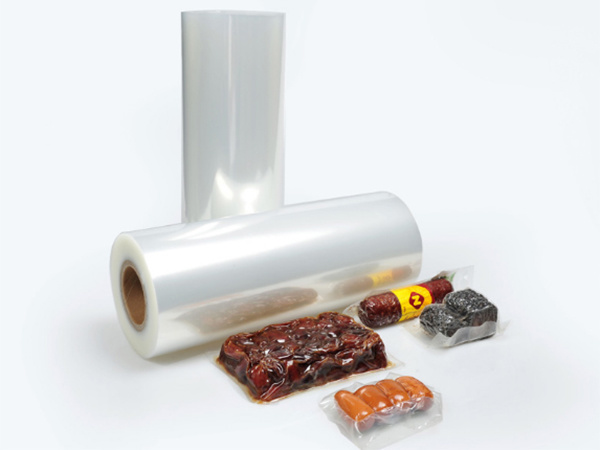
What are the characteristics of food stretch film? The easy-peel film manufacturer tells you
2022-02-10
The easy-peel film manufacturer believes that food stretch film has self-adhesive properties. It is a plastic film with adhesive on one side (cast) or both sides (blown), which can tightly wrap the items being packaged. The self-adhesiveness does not adhere to the surface of the wrapped food but only exists between the film and the film surface. No heat shrink treatment is required during packaging, which helps save energy, reduce packaging costs, facilitate container transportation, and improve logistics efficiency. Generally, food stretch film should have the following characteristics:

2022-01-24
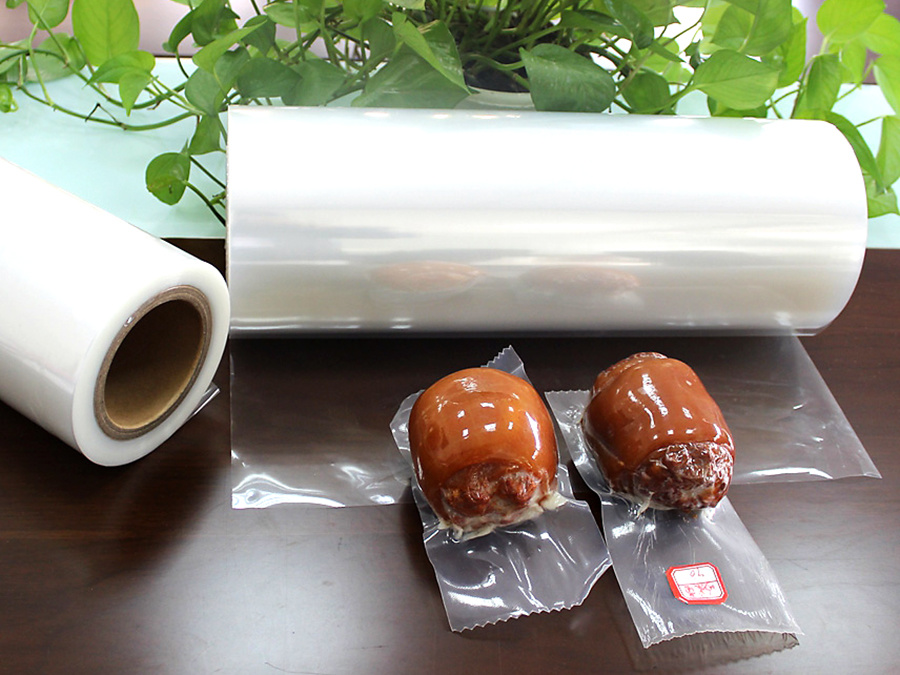
The easy-peel film manufacturer believes that multilayer co-extruded barrier films are generally produced using multilayer co-extruded blow molding or casting processes. Multilayer co-extrusion offers excellent barrier properties, mechanical properties, stretch forming performance, and heat sealing performance. The processing does not require lamination, nor does it involve residues of ink, adhesives, or additives, making it a relatively green and cost-effective food packaging technology.
2022-01-20
Easy-peel film manufacturers consider flexible packaging to be a very important packaging method for food and pharmaceuticals. However, during the flexographic printing process of flexible packaging, improper control may lead to excessive residual organic solvents, posing a threat to people's health. With the gradual improvement of living standards and health awareness, consumers have raised more demands for traditional flexible packaging, such as health, environmental protection, and convenience. Under these demands, functional co-extruded films have quietly emerged and have been successfully applied in various fields. What are the main characteristics and application areas of functional co-extruded films?
Expert Analysis on the Advantages and Applications of Vacuum Skin Packaging
2022-01-17
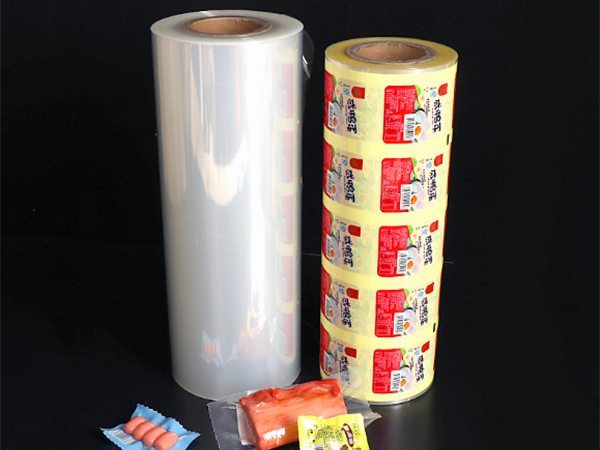
PE skin film is made by heating and softening transparent skin film, then using vacuum suction to shape the film according to the product's form and adhere it to cardboard (or bubble cloth and other backing boards). It tightly wraps and secures between the plastic film and the cardboard, providing both commercial hang card display and industrial shockproof protective packaging functions.

Competitive Advantages of PVDC Coextruded Films in the Market
2020-06-24
Good barrier performance, moisture retention, flavor preservation, and freshness retention capabilities, extending the shelf life of meat products. PVDC is an environmentally friendly, safe, and non-toxic material. The processing of PVDC raw materials is difficult, and only a few companies worldwide can process and develop it. With the domestic production and scaling of PVDC resin, its price is less than half that of EVOH. Using this material for packaging products offers excellent cost performance. Despite the limited number of companies with PVDC processing technology, the demand for PVDC applications is significant, accounting for a major share of preservation materials. Domestic meat brands such as Shuanghui, Yurun, and Jinluo extensively use PVDC film as packaging material.
The Importance of Choosing Suitable Packaging Materials in China's Meat Food Market
2020-06-24
China has a vast territory with significant differences between the north and south, so when choosing packaging materials, we must consider China's national conditions. Low-temperature products retain most of their nutrients compared to high-temperature products due to their lower sterilization temperatures. However, in China, there is no supporting cold chain system for low-temperature products, and quality is a key factor limiting the circulation of low-temperature foods in the Chinese market. Internationally, most low-temperature product packaging uses EVOH as the barrier layer, but in the Chinese market, due to cold chain limitations, EVOH's drawback is that its oxygen barrier performance sharply decreases as humidity increases. Low-temperature products produced in China generally have high moisture content (RH>95%), under which conditions EVOH cannot provide the required barrier properties. Therefore, packaging materials using EVOH as the barrier layer cannot meet China's national conditions. Practice has proven that replacing the barrier layer with PVDC solves this problem. This shows the impact of packaging material selection on product shelf life and also reflects that the difference in barrier properties between PVDC and EVOH is not just data on test reports but more about practical application effects for specific products.

Regarding the environmental issues of PVDC
2020-06-24
In recent years, concerns have been raised about the environmental impact of PVDC. In 2000, a major environmental debate on PVDC (including PVC) took place on the European continent, initiated by the European Union Environmental Protection Committee. As a result, the EU meeting in July 2000 issued a green paper on PVDC's environmental protection. The conclusion was: "Modern incinerators have reduced dioxin levels to lower levels, and the concentration of dioxins has not been affected by the presence of PVC and PVDC." "The current levels of chlorine in industrial waste and municipal garbage do not establish a direct quantitative relationship between chlorine content and dioxin formation." "Dioxin formation is largely influenced by temperature and oxygen concentration." "Considering comprehensive factors and 50 years of application in Europe, the environmental impact of PVDC (PVC) is negligible compared to its contribution to the environment." The meeting shifted its focus from discussing pre-production restrictions to debating no production restrictions but strengthening recycling.
Get Industry Solutions Online
If you have any product-related questions, feel free to contact us!
Add WeChat
